RoboParty RP1#
RoboPartyRP1Cfg configures the floating-base RP1 humanoid. Select a
variant with --variant in the CLI or with the model field in
RoboPartyRP1Cfg.from_dict().
|
|
|---|---|
|
|
|
|
|---|---|
|
|
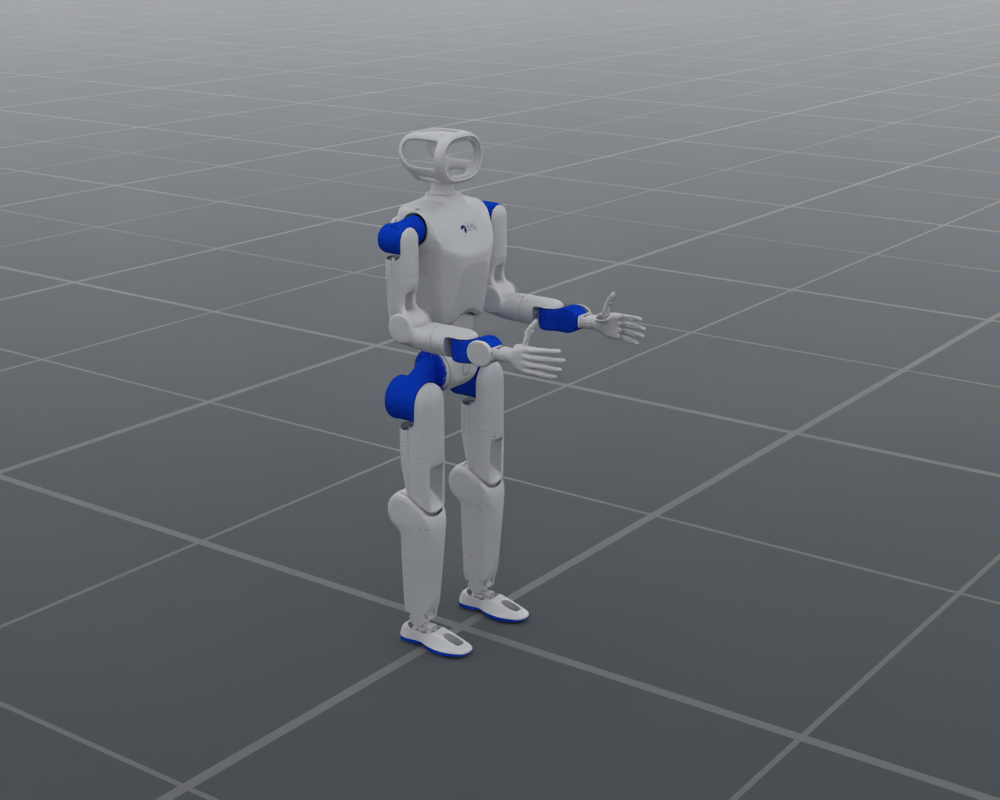
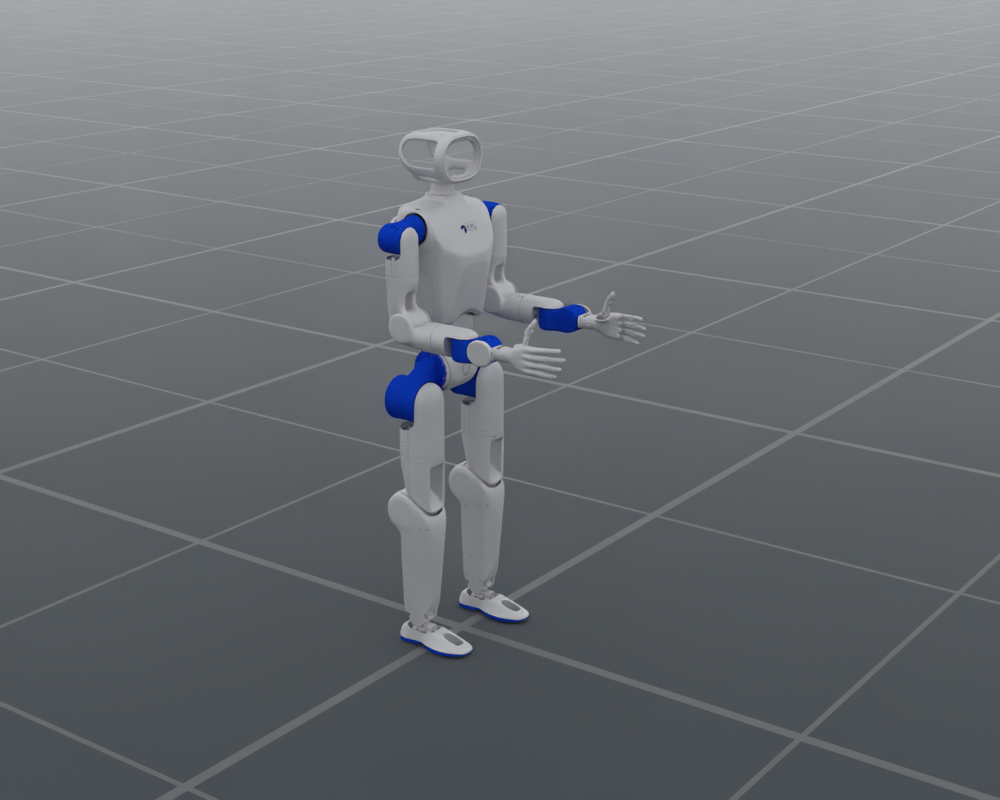
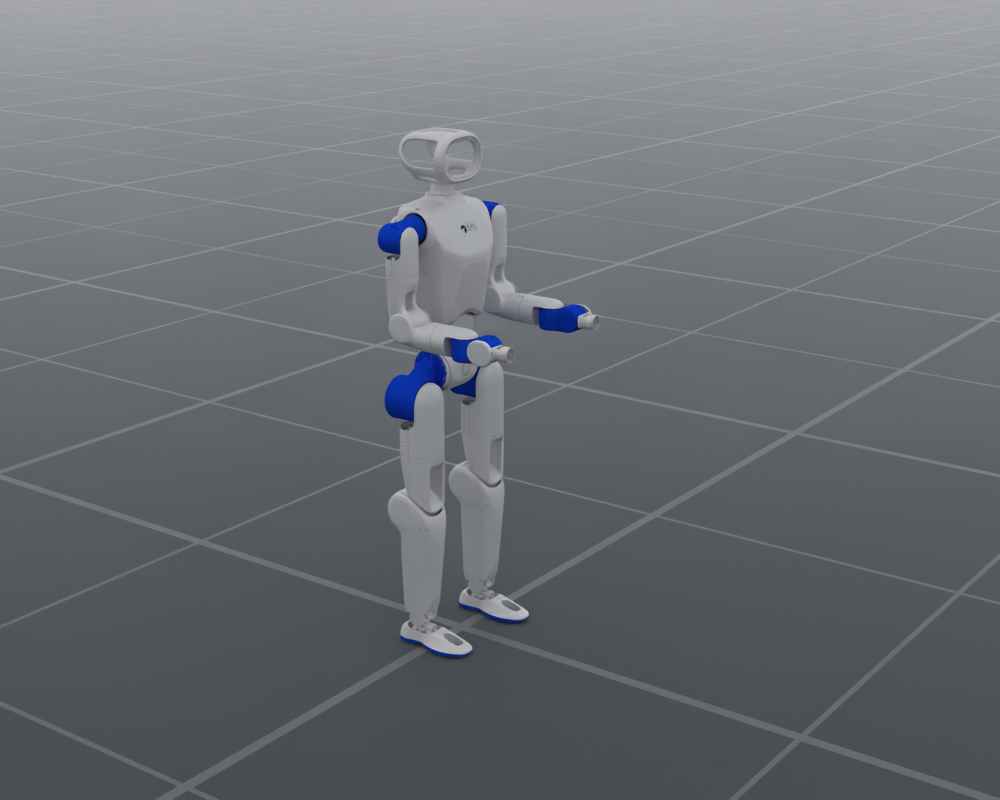
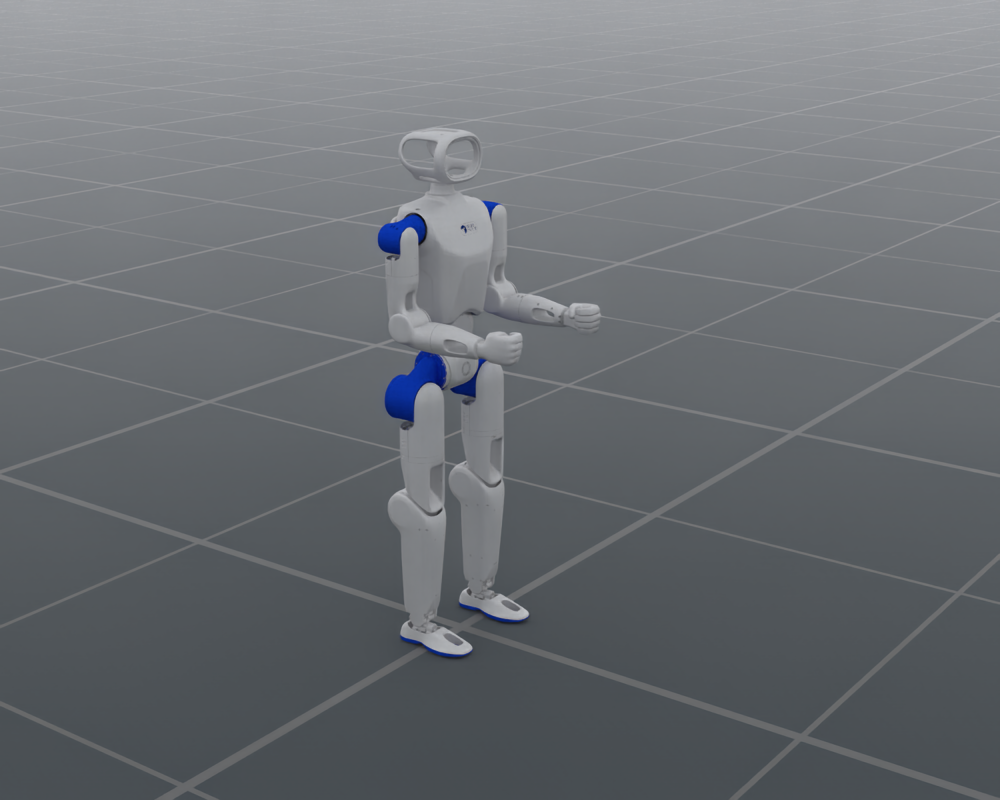
Each render uses its preset’s default joint pose. All four share the same camera and lighting. The shared locomotion render settings use DexSim OfflineRT, one sample per pixel, DLSS and exposure 1 with tone mapping disabled. Render manifest
Variants and control#
Variant |
URDF under |
Wrist axes per side |
Independent commands |
|---|---|---|---|
|
|
Roll, yaw and pitch |
28 in |
|
|
Roll |
24 in |
|
|
Roll, yaw and pitch |
28 in |
|
|
Roll, yaw and pitch |
28 in |
Each RP1 has six joints per leg, two at the waist, and three shoulder axes
and one elbow axis per arm. The single-axis wrists on 24dof account for
the four-joint difference from 28dof. The hand and hand_fixed models
share the visual hand geometry. The articulated version adds six independent
finger joints and five mimic followers per side. In hand_fixed, the fixed
fingers move as a unit with each wrist.
The floating base starts at 0.78 m from the upstream MJCF. The body uses
simulation PD gains and source URDF joint limits. The articulated finger
drives apply simulation limits of 2 N·m and 5 rad/s because the source
declares zero effort and velocity for the fingers. The finger armature
is 0.01 kg·m², matching the source MJCF and stabilizing the native mimic
response in Newton. Each finger12 thumb leader uses the same
mimic-feasible range as the standalone hand.
The presets expose joint-space control with build_pk_chain=False.
Usage#
embodichain data download --name RoboPartyRP1
embodichain preview-robot --robot RoboPartyRP1 --variant hand
Given a SimulationManager named sim:
from embodichain.extensions.robots import RoboPartyRP1Cfg

cfg = RoboPartyRP1Cfg.from_dict({"model": "hand"})
robot = sim.add_robot(cfg=cfg)
Newton scene settings#
RP1’s foot contacts can exceed the default Newton constraint capacity.
Pass the following physics_cfg to SimulationManagerCfg for the
single-robot scene used in validation.
from embodichain.lab.sim.cfg import NewtonPhysicsCfg

physics_cfg = NewtonPhysicsCfg(
    solver_cfg={
        "solver_type": "dexuni",
        "mujoco_options": {"njmax": 512, "nconmax": 256},
    }
)
Assets and provenance#
The downloader verifies the pinned archive and adds root-level URDFs with mesh paths relative to the archive root. The originals, MJCF and meshes remain in the local cache shared with standalone RP Hand. The pinned description repository leaves asset license terms unspecified. EmbodiChain retrieves the archive directly from RoboParty at runtime. Pinned RP1 source